Mirza Ghalib (1797–1869) remains the undisputed king of Urdu poetry — a poet whose verses turned love, wine, fate, and the riddle of existence itself into timeless questions that no reader has ever fully answered. Born in Agra and raised in the crumbling splendour of Mughal Delhi, Ghalib wrote of impossible love, the tavern and the cupbearer, the cruelty of destiny, and the strange comedy of being human, all with a wit and depth that have made him the most quoted poet of the Urdu language.
This collection is a heartfelt tribute to that immortal spirit. The 30 couplets gathered here are original verses, newly written in the spirit of Ghalib’s own signature themes — ishq and its impossibility, mai and the saqi, divine and existential questions, nostalgia for old Delhi, and his famous self-irony in the face of a cruel fate. They are presented in three scripts — original Urdu, easy Roman Urdu, and a faithful English translation — so every reader can feel the depth exactly as intended.
Every verse comes with Copy buttons, so the lines that touch your heart can be shared in seconds as a WhatsApp status or a message to someone who understands. Read slowly, the way Ghalib deserves to be read — some of these couplets will make you smile at fate, some will ache a little, and all of them carry the echo of a Delhi that lives forever in poetry.
Mirza Ghalib Poetry in Urdu
These opening verses capture the very essence of Ghalib’s world — love that ruins and completes at once, the cupbearer’s wise cruelty, questions asked of heaven itself, and the vanished lights of his beloved Delhi.
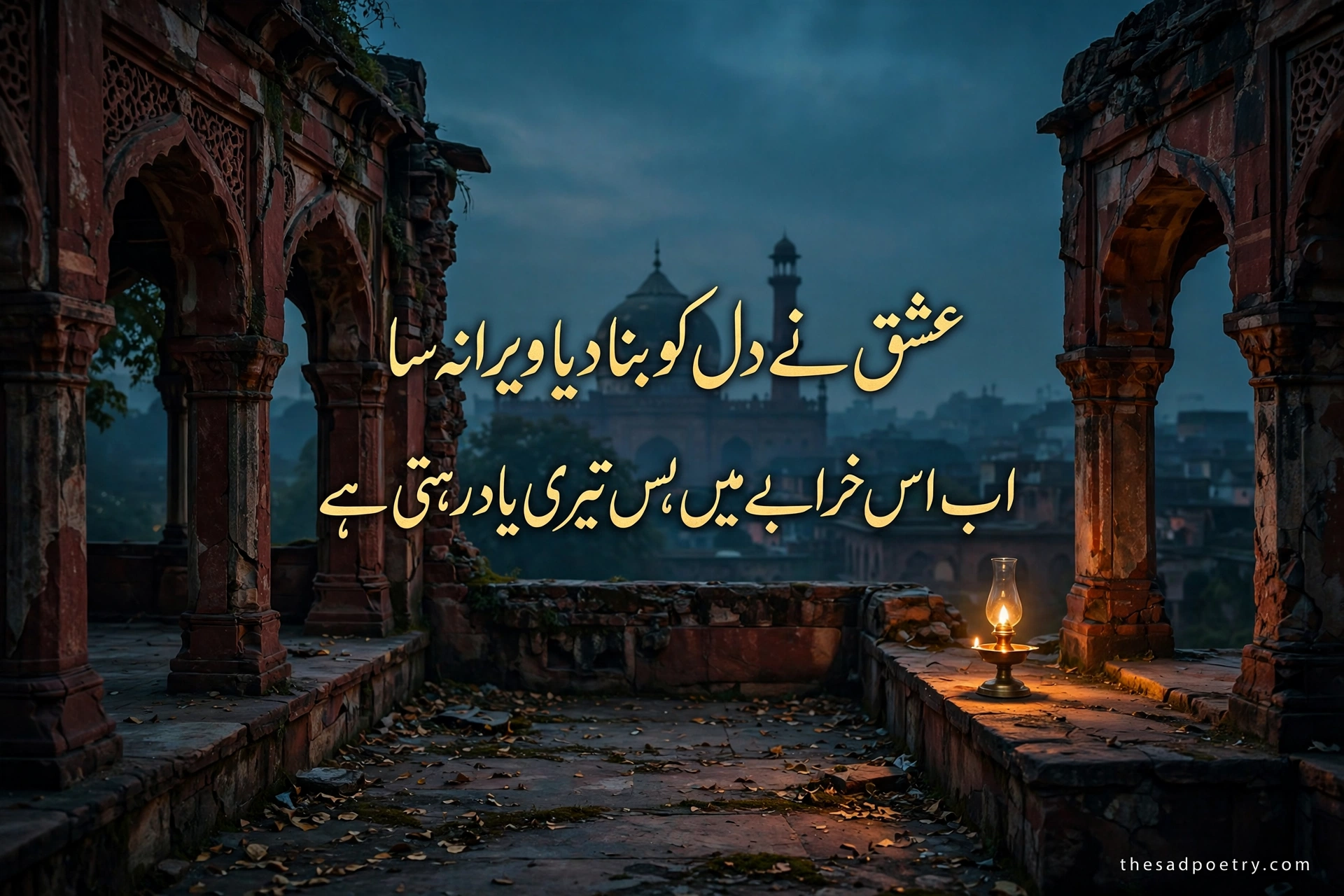
اب اس خرابے میں بس تیری یاد رہتی ہے
Ab is kharabe mein bas teri yaad rehti hai
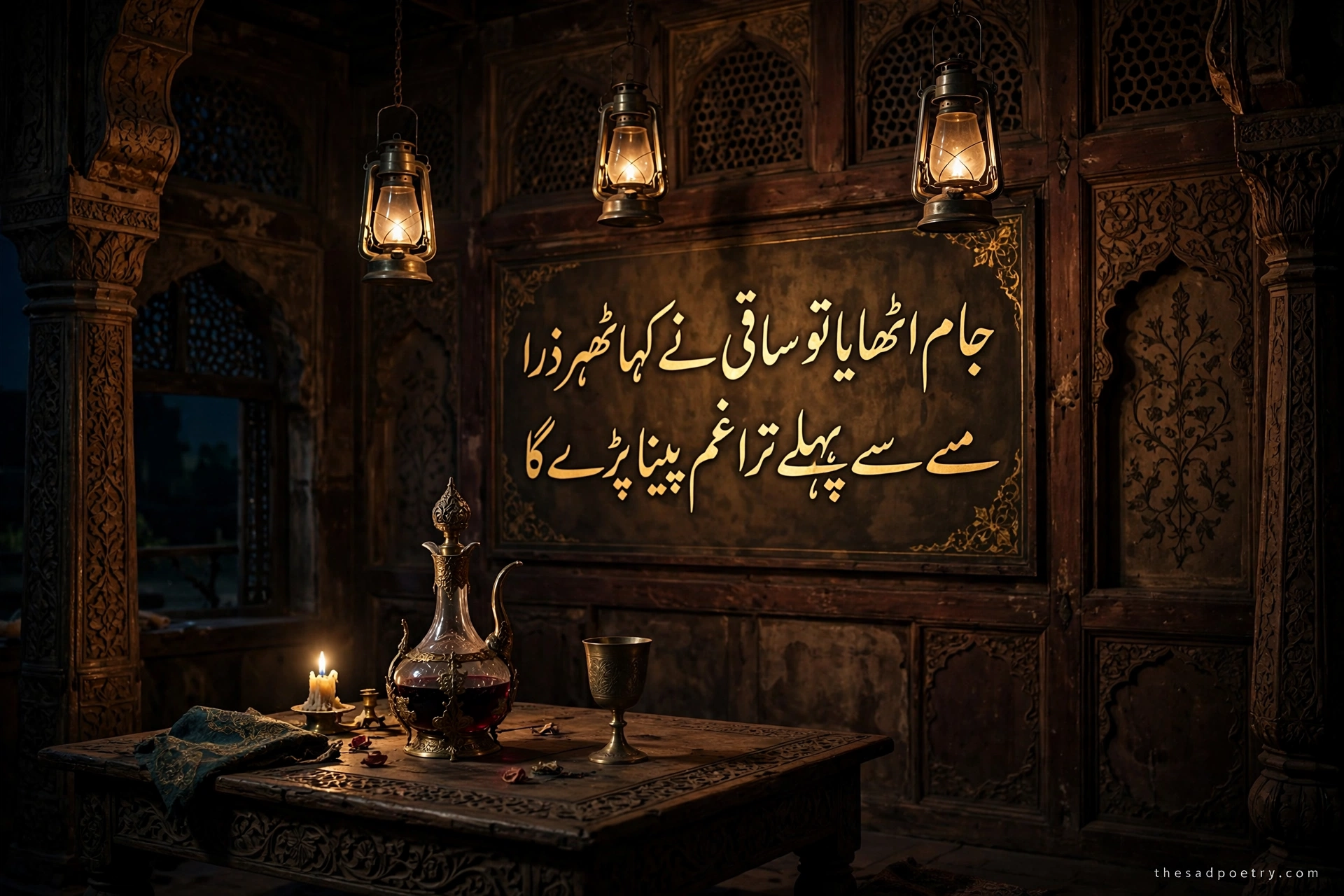
مے سے پہلے ترا غم پینا پڑے گا
Mai se pehle tera gham peena parega
جواب آیا، جہاں طلب نہ ہو وہاں
Jawab aaya, jahan talab na ho wahan
وقت نے چھین لیا ہر چراغ کا اجالا
Waqt ne chheen liya har chiragh ka ujala
دل نے ہنس کر کہا، یہ سودا مہنگا ہے
Dil ne hans kar kaha, yeh sauda mehenga hai
لکھنے والے نے ہمارا نام ہی نہیں لکھا
Likhne wale ne hamara naam hi nahi likha
Mirza Ghalib Love Poetry in Urdu
For Ghalib, love was never a gentle thing — it was a beautiful impossibility, a devotion offered at a door that rarely opened. These verses honour that signature passion: the beloved’s tresses, a single devastating glance, and a lover who lost himself completely.
اب دھوپ میں چلنے کی ہمت کہاں
Ab dhoop mein chalne ki himmat kahan
جو سب سے قریب تھا وہی سب سے دور نکلا
Jo sab se qareeb tha wahi sab se door nikla
دل کی دنیا میں اک شور سا بپا ہو گیا
Dil ki duniya mein ik shor sa bapa ho gaya
لگ جائے تو عمر بھر سلگتی ہے
Lag jaye to umar bhar sulagti hai
جس کے در پر سجدے کیے تھے برسوں
Jis ke dar par sajde kiye the barson
لوگ پوچھتے ہیں یہ دیوانہ کون ہے
Log poochte hain yeh deewana kaun hai
Mirza Ghalib Sad Poetry in Urdu
Sorrow was Ghalib’s oldest companion, and he wore it with dignity and a broken smile. These verses speak of sleepless nights, wounds the world laughs at, and a sadness so loyal it behaves like a guest who never leaves.
اب ہنسی آئے تو آنکھ بھر آتی ہے
Ab hansi aaye to aankh bhar aati hai
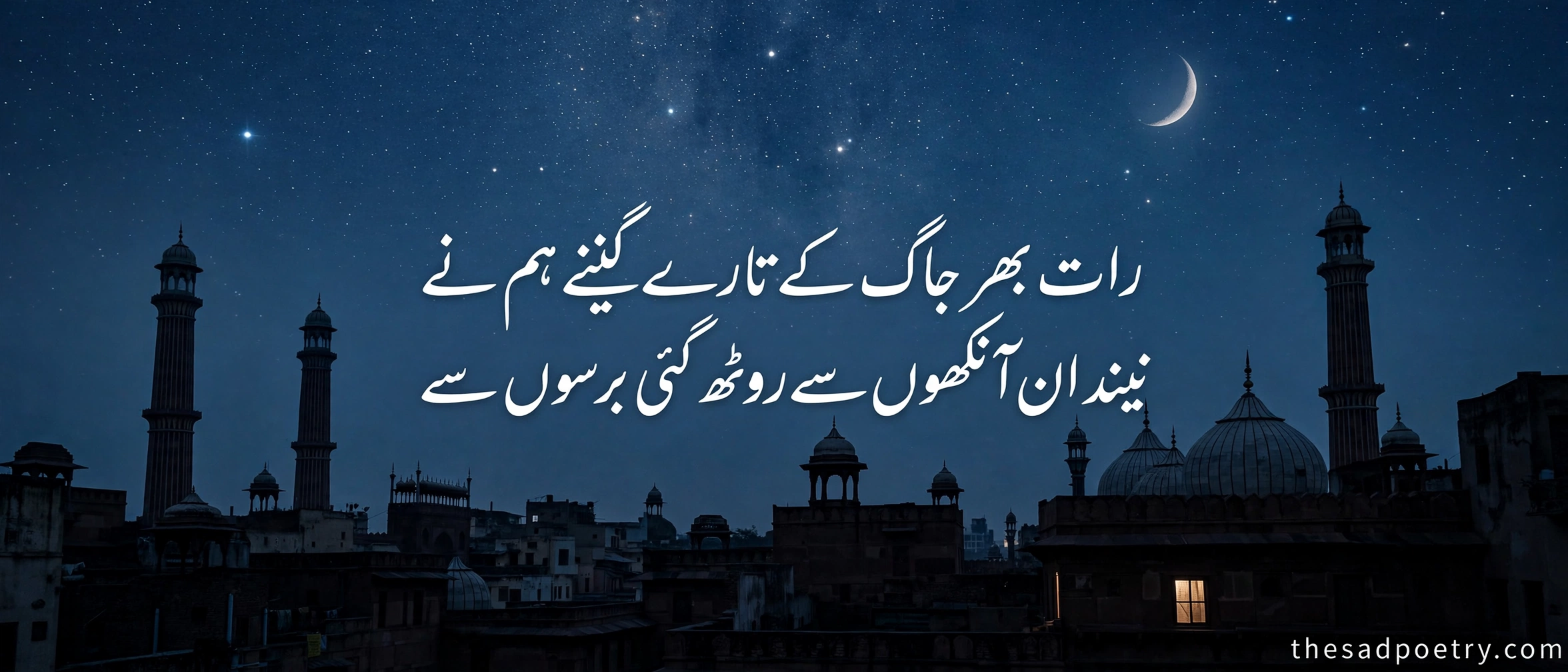
نیند ان آنکھوں سے روٹھ گئی برسوں سے
Neend in aankhon se rooth gayi barson se
خاموشی نے سب داستان سنا دی
Khamoshi ne sab dastan suna di
کون جانے دل میں کیا طوفان ہے
Kaun jaane dil mein kya toofan hai
ہم نے چھپا لیے تو سکون ملا
Hum ne chhupa liye to sukoon mila
یہ وہ مہماں ہے جو جاتا نہیں
Yeh woh mehmaan hai jo jaata nahi
Mirza Ghalib Poetry on Life in Urdu
Ghalib looked at life the way a philosopher looks at a riddle — amused, wounded, and endlessly curious. These verses reflect on time’s expensive lessons, the loneliness of the crowd, and a journey whose destination nobody has ever found.
جواب ڈھونڈتے ڈھونڈتے عمر گزری
Jawab dhoondte dhoondte umar guzri
بھیڑ بہت تھی مگر اپنا کوئی نہ تھا
Bheerh bohat thi magar apna koi na tha
بس وہ سبق مہنگا بہت پڑتا ہے
Bas woh sabq mehenga bohat parta hai
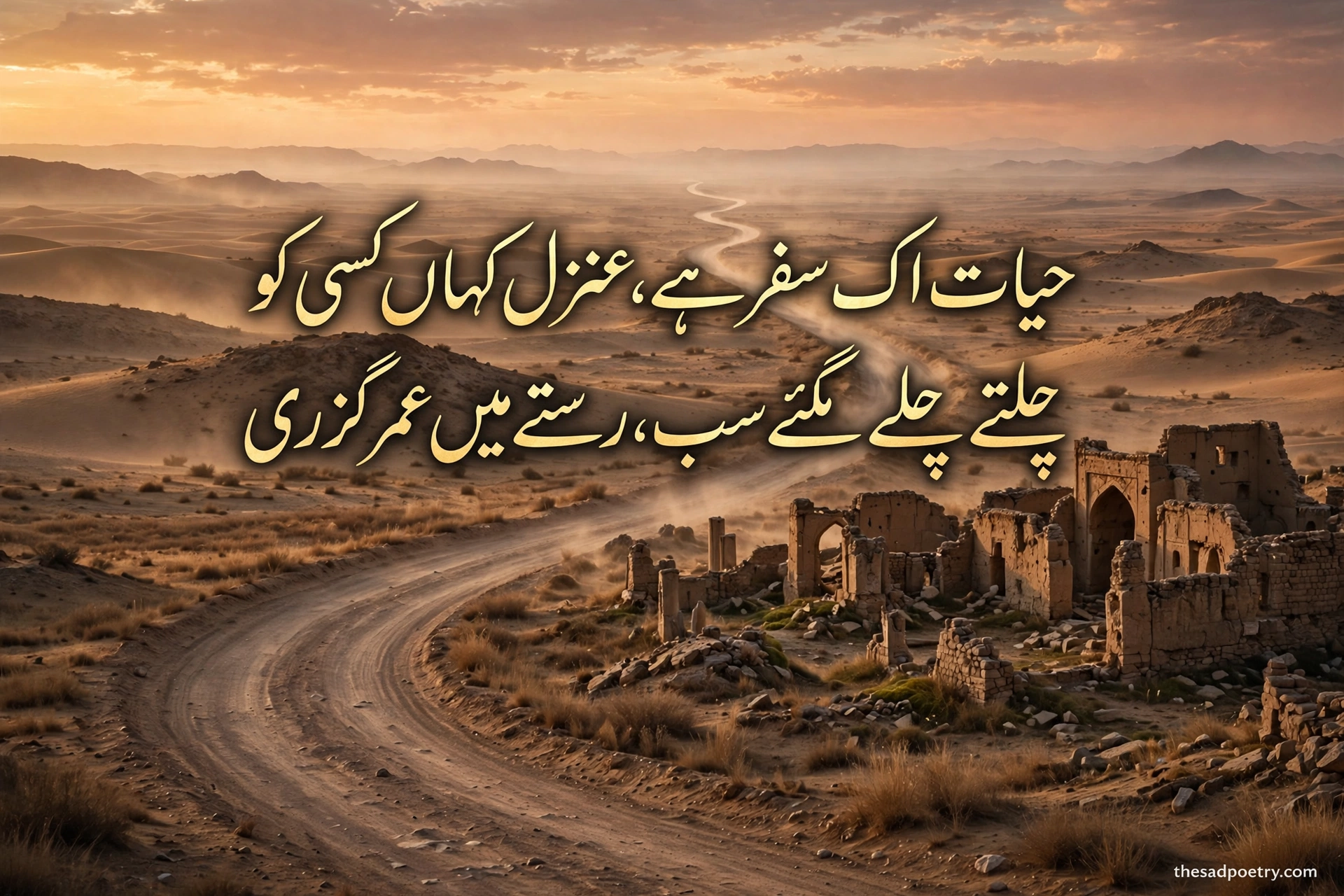
چلتے چلے گئے سب، رستے میں عمر گزری
Chalte chale gaye sab, raste mein umar guzri
فرشتہ بننے کی کوشش عبث ہے
Farishta banne ki koshish abas hai
زندگی ہے جو روز رلاتی ہے
Zindagi hai jo roz rulati hai
Mirza Ghalib 2 Line Poetry in Urdu
Short, sharp, and unforgettable — the way a true Ghalib couplet should be. These two-line verses are perfect for a WhatsApp status or a quiet moment of reflection: the tavern’s secret, the beggar’s pride, the mirror’s stranger, and the moth that cannot leave the flame.
خود کو کھو کر بھی نہ پایا اس کو
Khud ko kho kar bhi na paya us ko
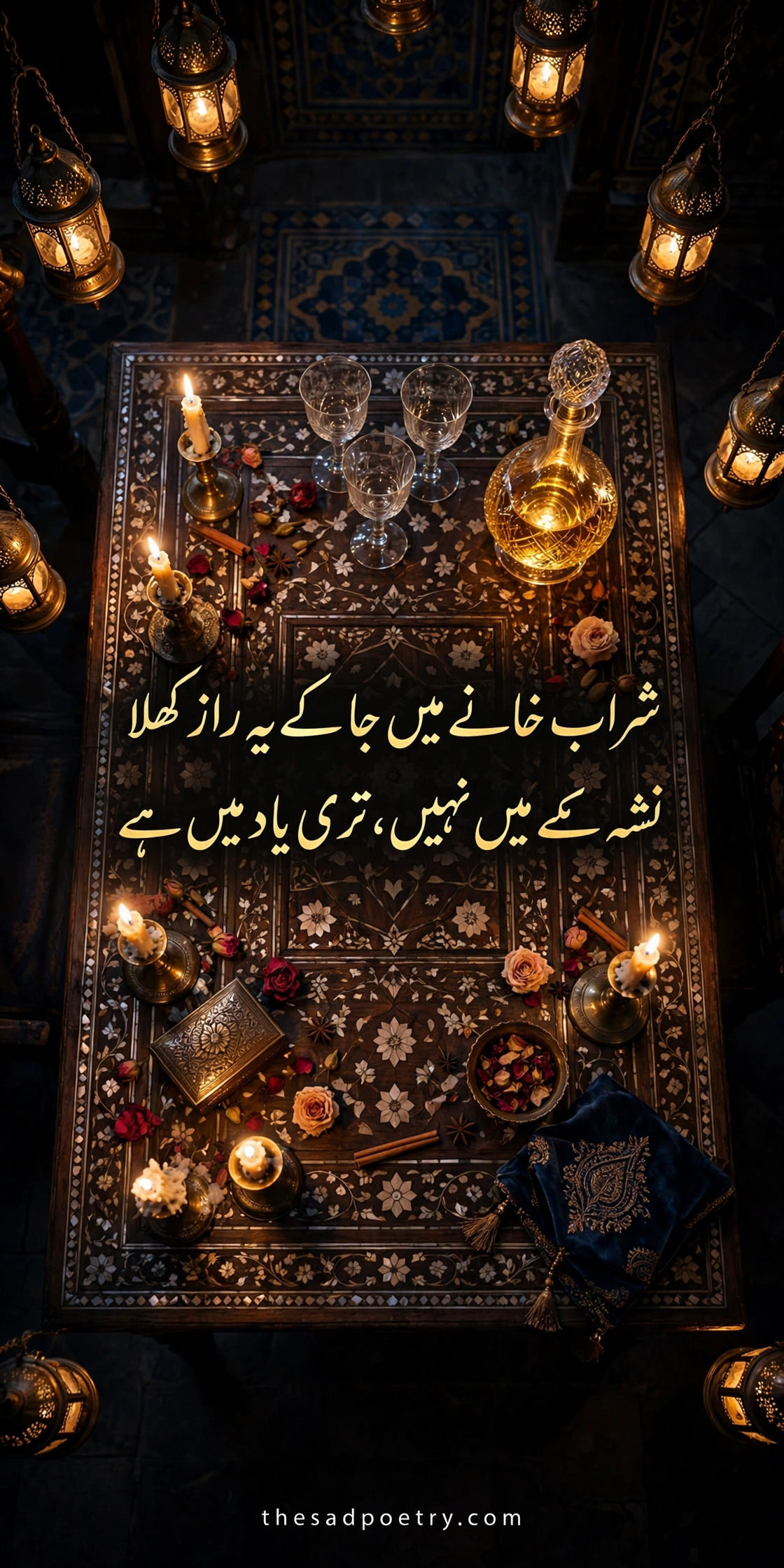
نشہ مے میں نہیں، تری یاد میں ہے
Nasha mai mein nahi, teri yaad mein hai
درد ہی دولت ہے، غم ہی جاگیر
Dard hi daulat hai, gham hi jageer
دل کی باتوں کا بھی اپنا سفر ہے
Dil ki baaton ka bhi apna safar hai
یہ اجنبی سا چہرہ ہمارا کیسے ہوا
Yeh ajnabi sa chehra hamara kaise hua
عشق مر جائے تو دیوانہ کہاں جائے
Ishq mar jaye to deewana kahan jaye
Why Ghalib Still Rules Every Heart
More than 150 years after his death, Mirza Ghalib is quoted everywhere — in conversations, in films, on status updates, and in the quiet thoughts of anyone who has ever loved and lost. The reason is simple: Ghalib never wrote about poetry’s subjects, he wrote about the reader’s own heart. His themes are everyone’s themes — a love that cannot be possessed, a fate that cannot be argued with, a God who answers in riddles, and a self that laughs at its own wounds. These tribute verses were written to carry that same spirit to today’s reader: deep without being difficult, witty without being shallow, and honest about the beautiful impossibility of it all.
How to Copy and Share This Poetry
Sharing a verse from this collection takes only a few seconds. Find the couplet that says what your heart cannot, then tap its Copy Urdu button for the original script, Copy Roman Urdu for easy reading on any phone, or Copy English to share its meaning with anyone. Paste it as your WhatsApp status, send it to a fellow lover of Ghalib, post it on your Instagram story over an old-Delhi evening, or keep it in your notes for the nights when fate feels heavy. You can also download the poetry image from this page and share it as a picture — sometimes two lines in Ghalib’s spirit say what a whole conversation never could.
Frequently Asked Questions (FAQs)
Who was Mirza Ghalib?
Mirza Asadullah Khan Ghalib (1797–1869) was the greatest poet of the Urdu language. Born in Agra, he spent most of his life in Delhi, where he became associated with the court of Bahadur Shah Zafar, the last Mughal emperor. He is regarded as the last great poet of the Mughal era. His poetry collection, the Diwan-e-Ghalib, and his remarkable Urdu letters — which transformed Urdu prose style — made him immortal. He wrote in both Urdu and Persian, lived through the fall of Delhi in 1857, and died in Delhi in 1869.
Are these Mirza Ghalib’s own verses?
No. Honesty matters here: all 30 couplets in this collection are original tribute verses, newly written in the spirit of Ghalib’s signature themes — love, wine, fate, and life’s great questions. Mirza Ghalib’s own poetry lives in the Diwan-e-Ghalib, and we warmly recommend reading it alongside these lines written in his honour.
What are the main themes of Ghalib’s poetry?
Ghalib’s great themes are ishq (love) and its impossibility, mai and the saqi (wine and the cupbearer) as symbols of longing and escape, deep existential and divine questions, the cruelty and comedy of fate, nostalgia for a vanishing Delhi, and his famous wit and self-irony — laughing at his own suffering before anyone else could.
Can I use these verses as a WhatsApp status?
Yes, absolutely. The 2 Line Poetry section is written specially for that purpose, but every couplet on this page comes with Copy buttons for Urdu, Roman Urdu, and English — simply tap, paste, and share as a status, caption, or message.
Why is Ghalib considered the greatest Urdu poet?
Because no one else combined so much in two lines: philosophy and passion, humour and heartbreak, doubt and devotion. Ghalib made the ghazal think. His verses carry layers of meaning that readers keep discovering for generations, and his imagery — the candle and the moth, the cup and the cupbearer, the heart and its ruin — has become the very language in which Urdu speakers express love and loss.
Final Thoughts
Ghalib once belonged to the courts of Delhi; today he belongs to every heart that has ever asked life a question and received only silence for an answer. These 30 original tribute verses were written so that his spirit — the impossible love, the raised cup, the witty complaint against fate — can reach a new generation of readers in Urdu, Roman Urdu, and English alike. Keep the couplets that feel like your own story, share them with someone who still believes poetry can explain the heart, and remember: as long as hearts keep breaking beautifully, Ghalib will never truly leave us.