Sindhi poetry carries one of the oldest and deepest souls in the world’s literature. From the sacred verses of the Shah Jo Risalo, composed by the great Sufi saint-poet Shah Abdul Latif Bhittai, to the folk songs sung on the banks of the Indus, this is a poetry born of desert winds, river waves, and hearts that have loved and lost for centuries. Every couplet holds the fragrance of Sindh’s soil — its Thar dunes, its ajrak colours, its peacocks, and its timeless tales of separation and devotion.
This collection brings you 30 original Sindhi verses written specially for thesadpoetry.com. Every couplet is presented in three scripts — the original Sindhi text in its beautiful Arabic script, an easy Roman Sindhi transliteration, and a faithful English translation — so you can read it in the script you love, understand every word deeply, and feel the emotion exactly as the poet intended. Each verse comes with Copy buttons, making it effortless to share the lines that speak for your heart.
Whether you are searching for Sindhi love poetry for your sajan, sad verses for the pain of vichhoro (separation), short two-line poetry, or a heartfelt Sindhi status for WhatsApp, you will find your own story in these lines. Read them slowly — in the echo of the Sindhu river and the wisdom of Latif, some verses will hurt, some will heal, and all of them will understand you.
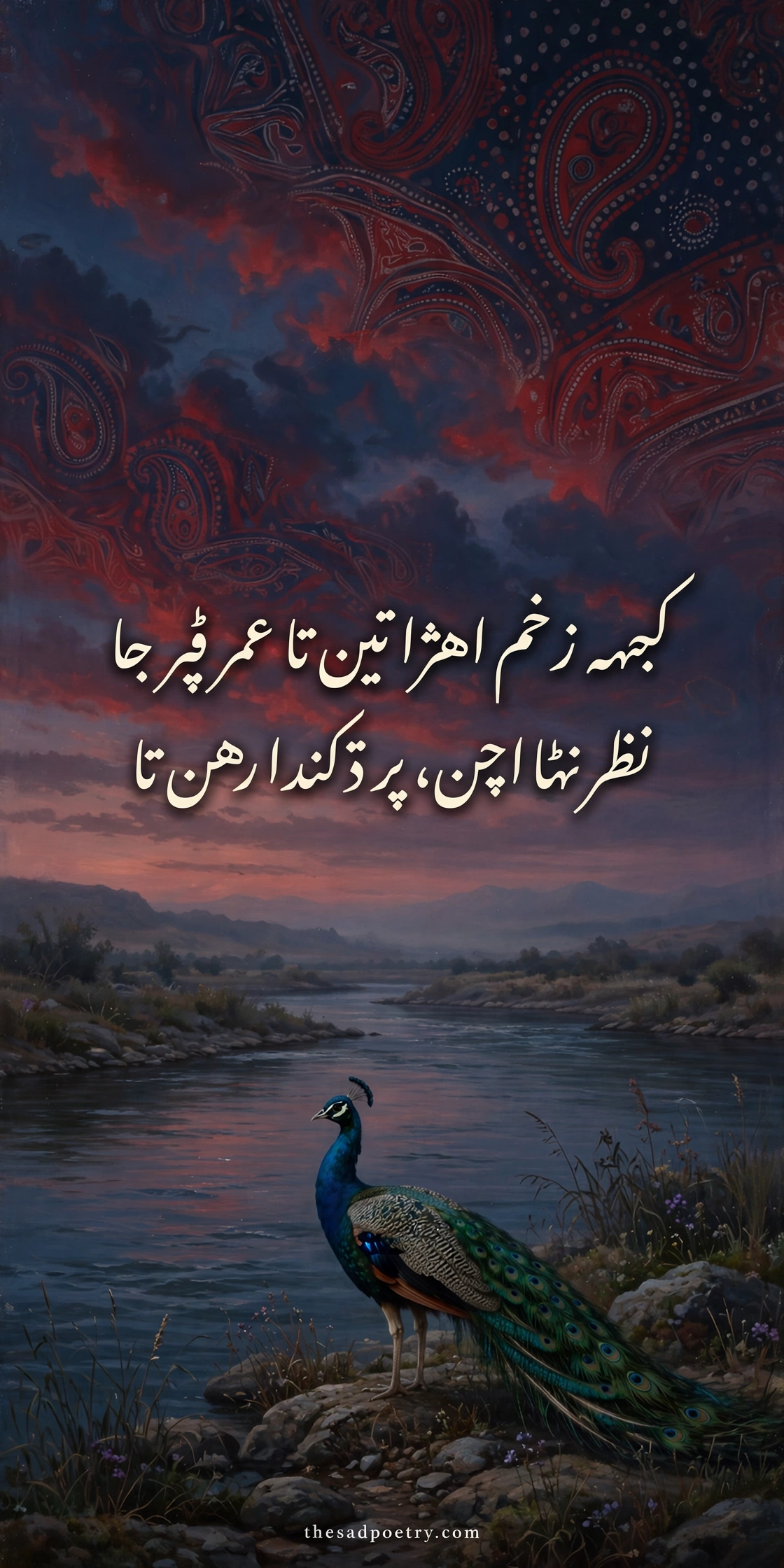
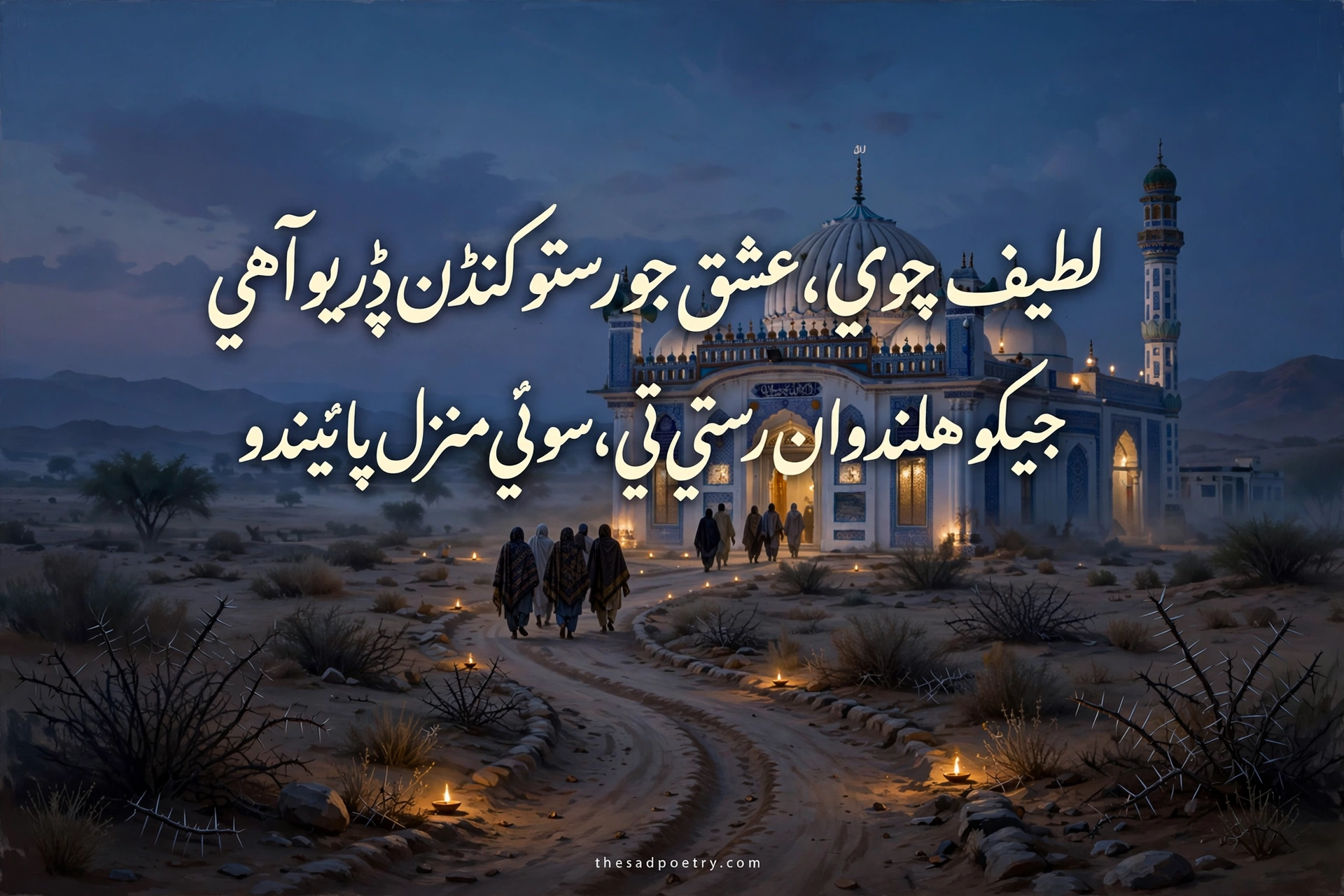
Sindhi Poetry
These opening verses capture the very soul of Sindhi poetry — the mighty Indus, the timeless wisdom of Shah Abdul Latif Bhittai, the golden sands of Thar, the ancient silence of Mohenjo-daro, and the sweetness of the Sindhi language itself. This is where every journey into Sindhi shayari begins.
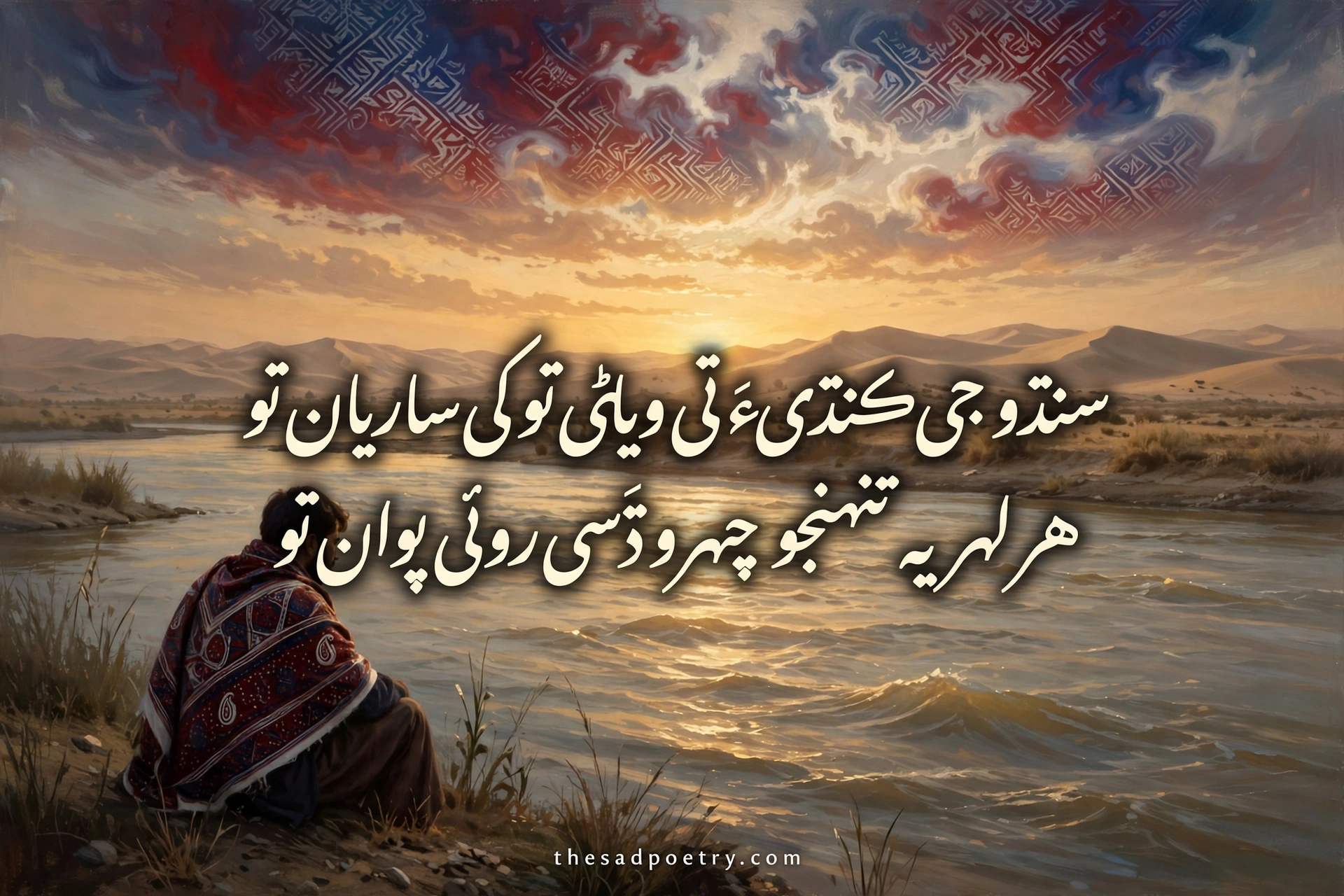
هر لهر ۾ تنهنجو چهرو ڏسي روئي پوان ٿو
Har lehar mein tuhinjo chehro disi roi pawan tho
جيڪو هلندو ان رستي تي، سو ئي منزل پائيندو
Jeko halando un rasti te, so ee manzil paindo
هر دانهون، هر گيت ۾ سنڌوءَ جي صدا آهي
Har daanhon, har geet mein Sindhu je sada aahe
مسافر دل اتي پنهنجي منزل ڳولي ٿو
Musafir dil uti pahinji manzil goli tho
صدين جو درد پنهنجي ڀتين ۾ لڪائي ٿو
Sadin jo dard pahinje bhitin mein lukai tho
هر اکر ۾ دل جي ڌڙڪن سمايل آهي
Har akhar mein dil je dharkan samayal aahe
Sindhi Love Poetry
Love in Sindhi poetry is pure devotion — the sajan is the whole world, a single glance shakes the heart, and a promise is enough to live an entire lifetime on. These verses celebrate that selfless, soul-deep love in the true folk spirit of Sindh.
هڪ نظر سان دل سارو لوڏي ڇڏيو آهي
Hik nazar saan dil saaro lodi chhadyo aahe
تنهنجي ياد سان هر شام گذري ٿي منهنجي
Tuhinji yaad saan har shaam guzre thi muhinji
دل جتي چاهي، اتي ئي ساجن جو گهر آهي
Dil jiti chahe, uti ee sajan jo ghar aahe
تون ئي منهنجي دنيا، تون ئي سارو جهان آهين
Ton ee muhinji duniya, ton ee saaro jahan aahein
تارا به لڪي وڃن ٿا تنهنجي نور اڳيان
Taara bhi luki wanjan tha tuhinje noor agiyan
بس هڪ ڀيرو چئو ته تون منهنجو آهين
Bas hik bhero chao ta ton muhinjo aahein
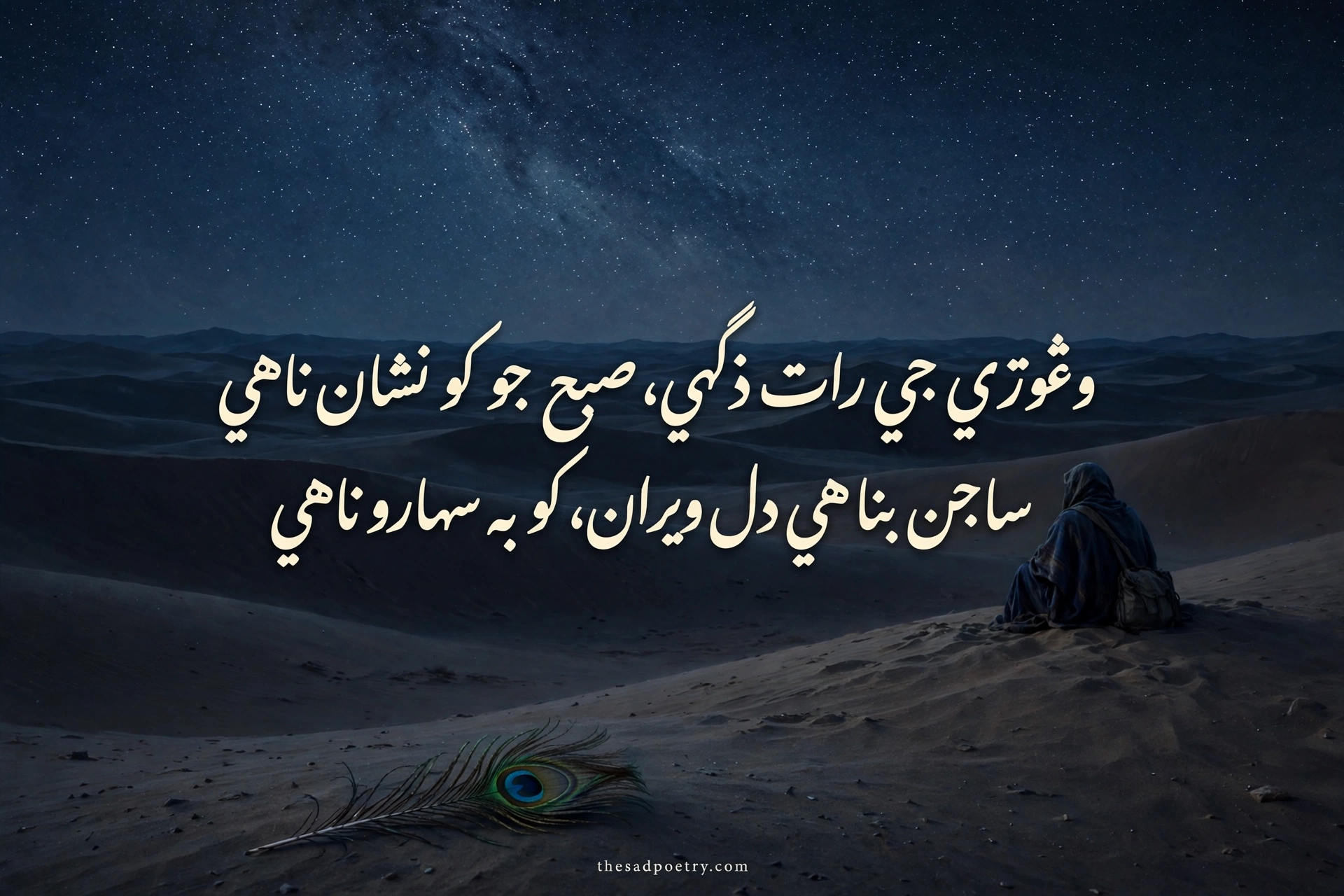
Sindhi Sad Poetry
Sadness flows through Sindhi poetry like the Indus itself — deep, quiet, and endless. These verses speak of vichhoro, the pain of separation, of tears hidden behind smiles, and of wounds that time itself refuses to heal.
دل جا زخم اڃا تازا ئي رهيا آهن
Dil ja zakham ajha taaza ee rahya aahin
ساجن بنا هي دل ويران، ڪو به سهارو ناهي
Sajan bina hi dil veeran, ko bhi saharo naahe
پر منهنجو درد ته هر ڏينهن وڌي ٿو
Par muhinjo dard ta har deenh wadhe tho
زندگيءَ جا رستا سڀ ويران پيا آهن
Zindagi’a ja rasta sabh veeran paya aahin
اندر ۾ طوفان آهي، ڪنهن کي ڪهڙي خبر
Andar mein toofan aahe, kanhen khe kehri khabar
درد نصيب ۾ هجي ته ڪير وساري سگهي ٿو
Dard naseeb mein huje ta ker visaari saghe tho
Sindhi 2 Line Poetry
Sometimes two lines are enough to carry an entire heart. These short Sindhi couplets say the most with the least — a broken heart’s silence, a letter the wind carried away, a lamp of hope in the storm — small in size, immense in feeling.
اکين جو پاڻي ئي سڀ ڪجهه چوي ٿو
Akhin jo paani ee sabh kujh chave tho
وڇوڙي جو درد سمنڊ کان به گهرو آهي
Vichhore jo dard samund khan bhi gehro aahe
خاموشيءَ ۾ سڀ ڪجهه لٽجي ويو
Khamoshi’a mein sabh kujh lutji wayo
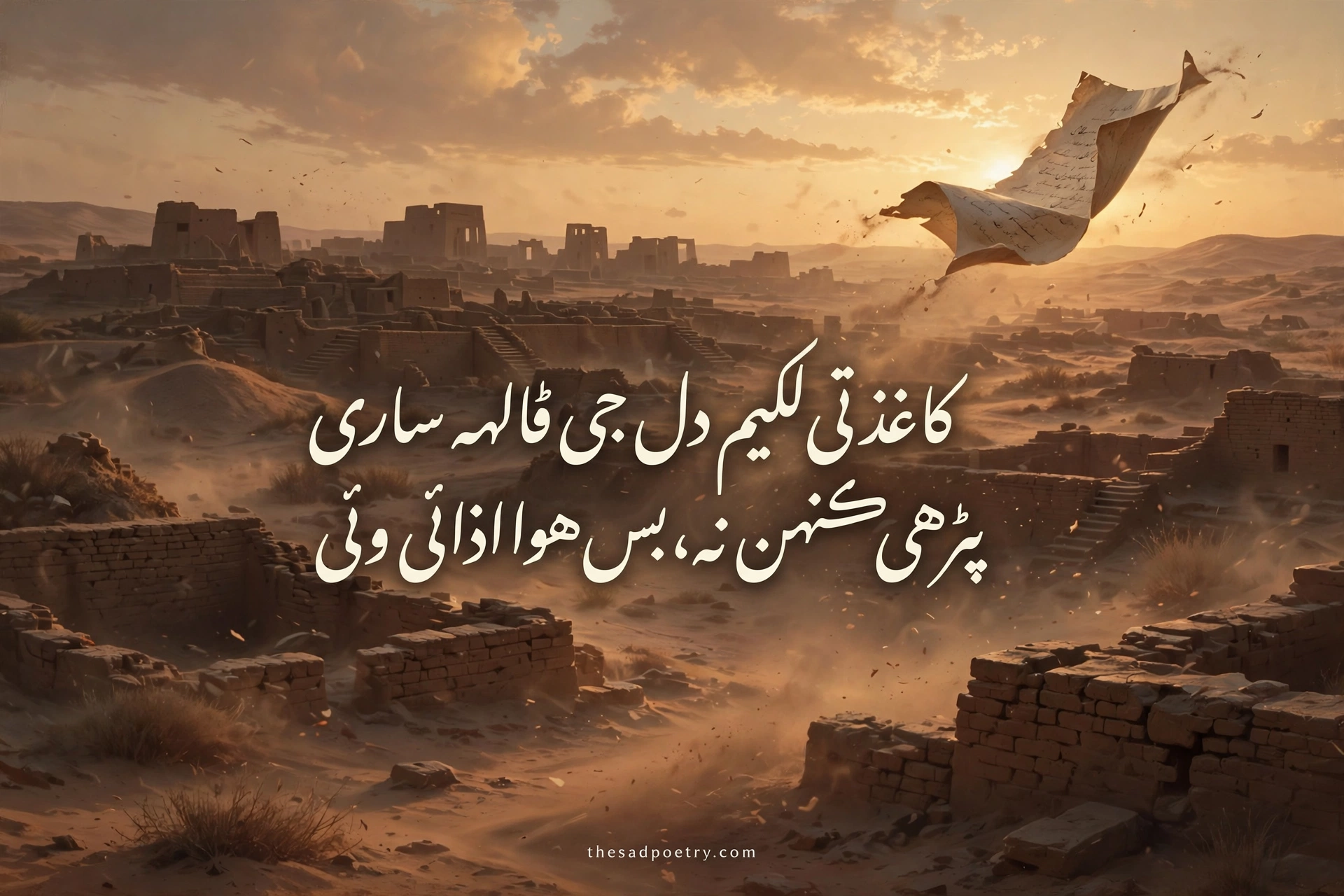
پڙهي ڪنهن نه، بس هوا اڏائي وئي
Parhi kanhen na, bas hawa udai wayi
طوفان آيو ۽ سڀ ڪجهه وسائي ويو
Toofan aayo aen sabh kujh wasai wayo
شايد ڪڏهين در کلي ۽ تون نظر اچين
Shayad kadhen dar khule aen ton nazar achin
Sindhi Status
These final verses are made for sharing — short, deep, and status-ready. Set one as your WhatsApp status, post it on your Instagram story, or let it quietly say everything your heart has been carrying in the beautiful words of Sindh.
اهائي منهنجي زندگيءَ جي ڪهاڻي آهي
Aha ee muhinji zindagi’a je kahani aahe
نظر نٿا اچن، پر ڏکندا رهن ٿا
Nazar natha achan, par dukhanda rahan tha
نه جيئڻ ڏئي ٿي، نه مرڻ ڏئي ٿي
Na jeean dae thi, na maran dae thi
دل چوي ڪجهه، زبان چپ رهجي وڃي ٿي
Dil chave kujh, zabaan chup rehji wanje thi
بدلي ۾ مليو بس درد ۽ تنهائي
Badle mein milyo bas dard aen tanhai
خوشي به هاڻي ڊپ جهڙي لڳي ٿي
Khushi bhi haani dap jehri lage thi
Why Sindhi Poetry Touches Every Heart
Sindhi poetry touches every heart because it is not merely written — it is lived. For centuries, the verses of Shah Abdul Latif Bhittai have been sung in villages, shrines, and desert gatherings, carrying the pain of separated lovers, the patience of wandering seekers, and the hope of hearts that refuse to give up. The language itself flows like the Indus — soft yet unstoppable — and its images of rivers, deserts, and moonlit nights speak to anyone who has ever loved, waited, or wept in silence. When a Sindhi couplet names your hidden sorrow, it feels less like reading poetry and more like meeting an old friend who has known your heart all along.
How to Share This Sindhi Poetry
Sharing a verse from this collection takes only a few seconds. Find the couplet that matches what your heart feels, then tap the Copy Sindhi button for the original script, Copy Roman Sindhi for easy reading on any phone, or Copy English if you want to share its meaning with someone. Paste it as your WhatsApp status, send it to your sajan or to a friend who carries the same silent pain, post it on your Instagram story with a picture of the Indus at sunset, or save it in your notes for the nights when memories return. You can also download the poetry image from this page and share it as a picture — sometimes two lines in the words of Sindh say what a long conversation never could.
Frequently Asked Questions (FAQs)
What is Sindhi poetry?
Sindhi poetry is the poetic tradition of the Sindhi language, rooted in the land of Sindh along the Indus river. It includes classical Sufi poetry, folk songs, and modern shayari expressing love, separation, spirituality, and the sorrows of everyday life — usually in graceful couplets written in the Sindhi Arabic script.
Who was Shah Abdul Latif Bhittai?
Shah Abdul Latif Bhittai (1689–1752) was the greatest poet of the Sindhi language and a revered Sufi saint. His masterpiece, the Shah Jo Risalo, retells Sindh’s beloved folk tales — such as Sassui-Punhun and Umar-Marvi — as spiritual journeys of love, separation, and the search for God. His verses are still sung at his shrine in Bhit Shah and across Sindh today.
Can I use these Sindhi verses as a WhatsApp status?
Yes, absolutely. The Sindhi Status section of this collection is written specially for that purpose — short, heartfelt two-line couplets in Sindhi script, Roman Sindhi, and English that fit perfectly as a WhatsApp status, Instagram caption, or Facebook post.
Are these Sindhi poetry verses original?
Yes. All 30 verses in this collection are original, written for thesadpoetry.com in the spirit of Sindh’s classical and folk traditions. Each one comes with its Roman Sindhi transliteration and an English translation, so you can share them anywhere with credit to the site.
How can I copy and share a verse from this page?
Simply choose the verse that speaks to you and tap its Copy Sindhi, Copy Roman Sindhi, or Copy English button. The text is copied instantly, ready to paste into WhatsApp, Messenger, SMS, or any social media app. You can also download the poetry image on this page and share it as a picture.
Final Thoughts
Sindhi poetry is the voice of a land where the river teaches patience, the desert teaches endurance, and love teaches everything else. These 30 verses were written so that the beauty of this ancient tradition can reach every heart that needs it — in Sindhi script for those who call it their mother tongue, in Roman Sindhi for those learning to feel it, and in English for the whole world to understand. Keep the couplets that speak your story, share them with someone who is silently carrying the same pain, and remember the lesson Latif left for every lover: the road of love is hard, but the heart that walks it with honesty is never truly lost.